Does social media increase isolation in teens?
We've all watched our phone screen glow at 2 am, sent a text or two, and maybe even watched a livestream. Although you may not be right next to the person you're texting, never before has a generation been so constantly connected. Yet the lack of sleep and emotional baggage still seems to wear us down.
In contrast, rates of loneliness and anxiety continue to climb. Social media promises community at the speed of Wi-Fi, collapsing distance with a swipe. But as our feeds fill up, some wonder whether our real lives are quietly emptying, now living in a world where everyone is always online.
Despite its promise of connection, social media can deepen feelings of isolation in subtle but powerful ways. Endless scrolling often replaces face-to-face interaction, reducing meaningful conversations to likes, emojis, and brief comments. Instead of strengthening relationships, constant exposure to curated highlight reels can fuel comparison and insecurity, making users feel excluded from experiences they only see through a screen. According to Regis University, “Social isolation can be defined as 'a state in which an individual lacks a sense of true belonging, true engagement with others, and fulfilling relationships.’”
On the other hand, social media has redefined what connection looks like. Platforms like Instagram, TikTok, and Snapchat allow friendships to stretch across cities, countries, and time zones, making it possible to maintain relationships that might otherwise fade. Group chats buzz throughout the day, offering instant support, humor, and shared experiences. For many young people, online communities provide a sense of belonging they may struggle to find offline. According to Miranda Barker, LICSW, LCSW, “It can help us keep in touch with high school friends, wish an old coworker happy birthday, or share photos of big life milestones. These small acts can make us feel connected even when geographically we’re not near.”
In the end, social media is neither entirely isolating nor entirely connecting; it is a tool that amplifies how we choose to use it. It has the power to bridge oceans, reunite old friends, and give voice to those who might otherwise feel unseen. Yet it can also magnify loneliness, turning connection into comparison and conversation into performance. For our generation, the challenge is not simply logging on or off, but learning how to balance digital interaction with real-world presence. True connection may not be measured by followers or likes, but by the depth of the relationships we build away from the screen.
Works Cited
Barker, Miranda, LICSW, LCSW. “Is Social Media Making Us More or Less Isolated. Ellie Mental Health, PLLP.” Ellie Mental Health, PLLP, 25 Feb. 2024, elliementalhealth.com/is-social-media-making-us-more-or-less-isolated/. Accessed 20 Feb. 2026.
“Does Social Media Create Isolation? | Regis College Online.” Regiscollege.edu, 24 Dec. 2019, online.regiscollege.edu/blog/does-social-media-create-isolation. Accessed 20 Feb. 2026.
RELATED ARTICLES
Planning a school formal might look effortless from the outside, but behind the scenes it takes many months of decisions, teamwork and problem-solving to bring t
How does a teenager maintain humanity in a world where trust isn't so easy?
A Cabaret night was held by the Theatrical Society from 6:30 PM to 10:00 PM on January 9 at the Nutley Elks Lodge.
Today's teenagers are growing up in an age of fast fashion, food apps, and social media trends all of which control how they spend their money.
Imagine walking in a classroom day after day and not hearing your home language, opening books filled with characters who look nothing like you, or noticing that
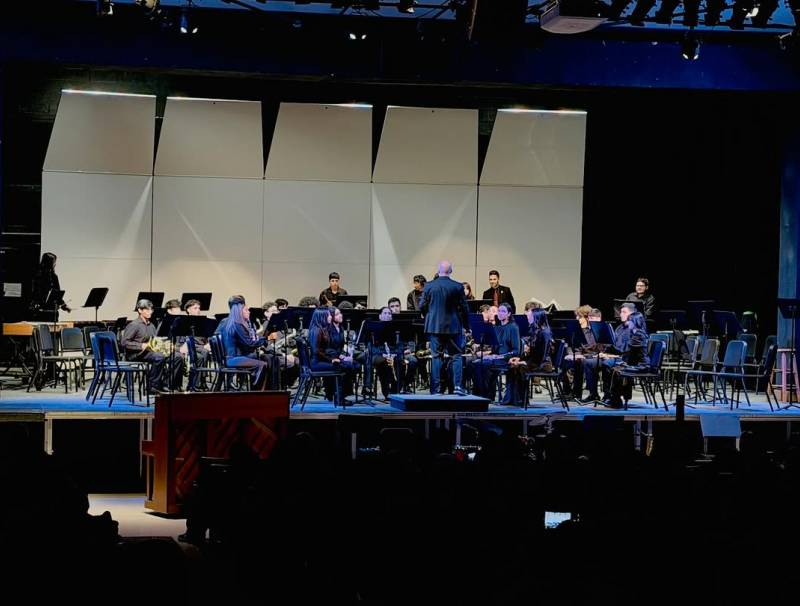
From Music Theory classes, to the Marching Band, to zero period Orchestra, the various options that the Nutley Music Department offers to students at the high sc